fungi life cycle explained
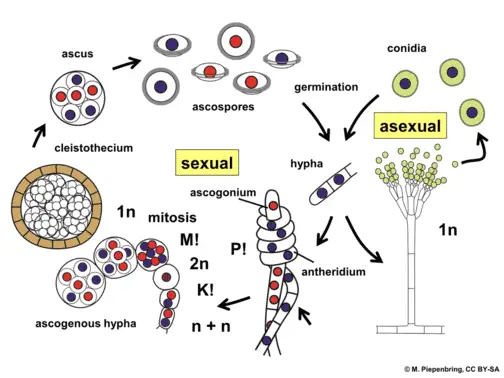
Ad Browse Discover Thousands of Book Titles for Less. Under favourable conditions each conidium germinates by germ tube which ultimately grows into somatic mycelium of the new individual.

The Mushroom Life Cycle
The life cycle inventory phase involves the compilation of elementary flow data ie flows that pass.
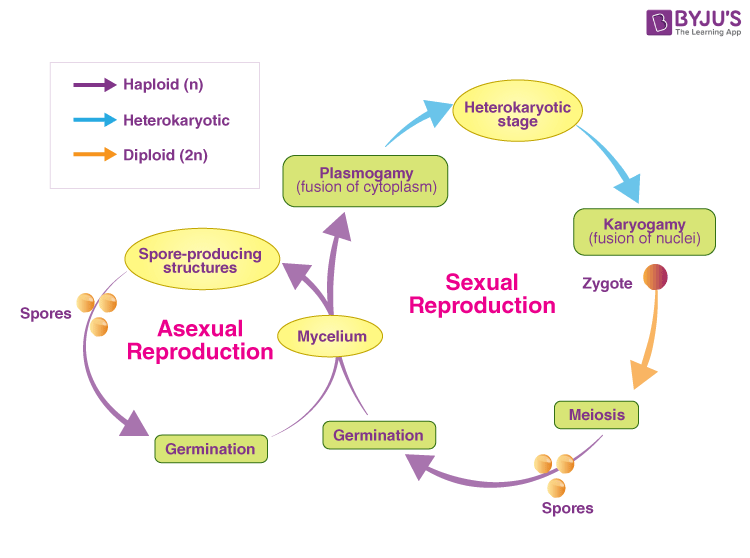
. Most fungi are microscopic but many produce the visible fruitbodies we call mushrooms. It is characterized by zygotic meiosis and haploid adult mycelium. There are four basic steps in the life cycle of a fungi.
Fungi are eukaryotic organisms and include yeasts moulds and mushrooms. Life cycle of fungi. The conidia are developed from the ascospores.
Therefore many people compare mycelium to a tree and mushrooms to its fruit. Not quite plant not quite animal mushrooms belong to the fungi kingdom. Fungi exhibit the phenomenon of alternation of generation.
Asexual reproduction takes place by uninucleate thin-walled spores which are referred to as conidia. Karyogamy takes place during teleutospore germination and the diploid nucleus migrates in the promycelium. Fungi life cycle explained Wednesday March 2 2022 Edit.
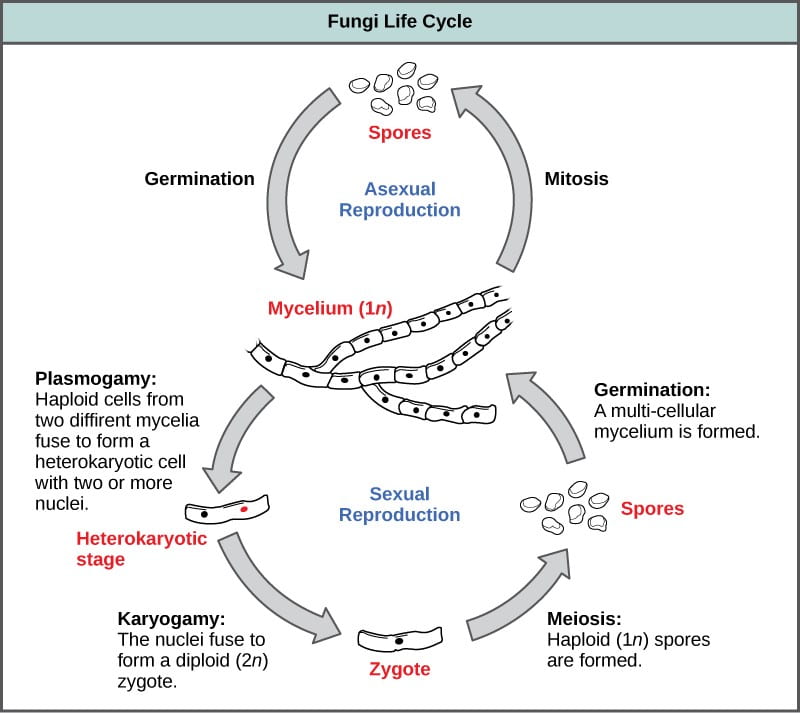
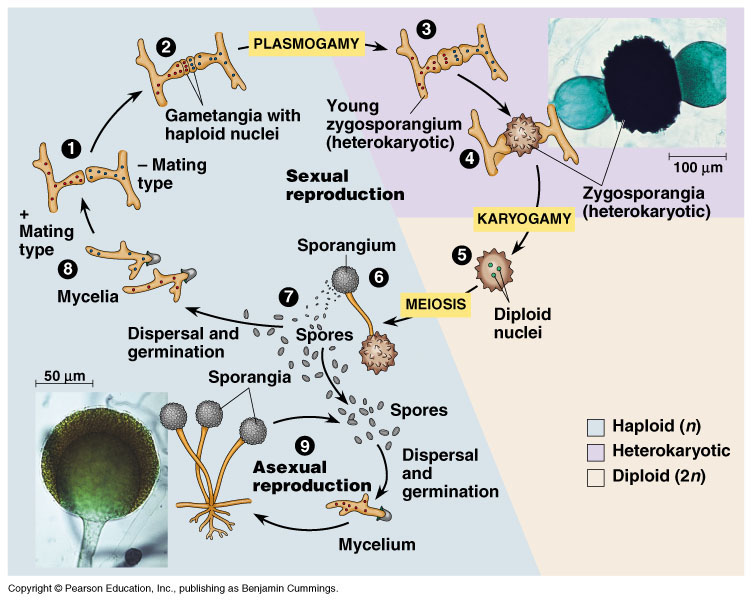
The haploid phase ends with nuclear fusion and the diploid phase begins with the formation of the zygote the diploid cell resulting from fusion of two haploid sex cells. In these cells genetic material from the parent fungi combines and divides to form spores. Where four haploid nuclei of two groups and are produced as a result of meiosis.
Meiosis reduction division restores the haploid number of chromosomes and initiates the. While some fungi reproduce sexually others reproduce asexually. Spore germ hypha mature mycelium.
The life cycle of a mushroom begins and ends through five stages of evolutionary phases beginning as a fungal spore seeds and completing its cycle as a mature fruiting body the part of a mushroom we all identify and know that releases new spores to create a new cycle all over again. During sexual reproduction the changes involved in the process occur in. The life cycle of fungi has many different patterns based on the species of the fungi.
In the life cycle of a sexually reproducing fungus a haploid phase alternates with a diploid phase. Till recently this scheme of zygotic meiosis and haplontic Pythium life cycle had been held widely by mycologists. Such a life cycle with a prolonged haploid vegetative phase haplophase and a single-celled diploid oospore representing the diplophase is called haplontic.
The Life Cycle of Fungi 1. The Life Cycle Of A Mushroom. They then travel on the wind until they land on an appropriate surface and start the cycle again.
The germ tube. Some fungi are multicellular while others such as yeasts are unicellular. Fungi are subdivided on the basis of their life cycles the presence or structure of their fruiting body and the arrangement of and type of spores reproductive or distributional cells they produce.
Fungi reproduce both sexually and asexually and they also have symbiotic associations with plants and bacteria. If this is a. The mycelium in most species of Taphrina is annual but in some species it is perennial.
The three major groups of fungi are. Their role is to produce and release spores the fungal equivalent to seeds. Most of the ecology of the soil will die the plants do ok in the short run as they are able to absorb from the dead bacteria and fungi but it is a slow cycle of death.
Most of the molds indoors are considered to go through a four-stage life cycle. In certain rust fungi the teleutospore on germination becomes septate without the formation of an external promycelium. Once the spores are mature the mushroom releases them into the air.
The fungus spends most of its life cycle in this state and only forms mushrooms under specific conditions. Mushroom spores can detect. But first what even is a mushroom.
Macroscopic filamentous fungi that form large fruiting bodies. Despite the name this doesnt have anything to do with bacteria or disease. The fused hyphae containing haploid nuclei from two.
The mushroom life cycle can be broken down into five stages. Mushroom spores are tiny microscopic reproductive units that are produced by fungi as well as some. Not all fungi reproduce in the same way.
Fungi can reproduce asexually by budding and many also have sexual reproduction and form fruitbodies that produce spores. Which for comparisons sake is more closely related to humans than plants. Fungi reproduce sexually either through cross- or self-fertilization.
However they are also responsible for some. These spores also contain enough nutrients to support germination when it occurs. But this model provides a good overview in terms of how fungi grows from birth to death.
Fungus are a kingdom of usually multicellular eukaryotic organisms that are heterotrophs cannot make their own food and have important roles in nutrient cycling in an ecosystem. This is how the fungus reproduces asexually.

24 1c Fungi Reproduction Biology Libretexts

Characteristics Of Fungi Openstax Biology 2e

Life Cycle Of An Am Fungus And The Different Steps During Am Development Download Scientific Diagram

Zygomycota The Conjugated Fungi Biology For Majors Ii

Ascomycota The Sac Fungi Biology For Majors Ii
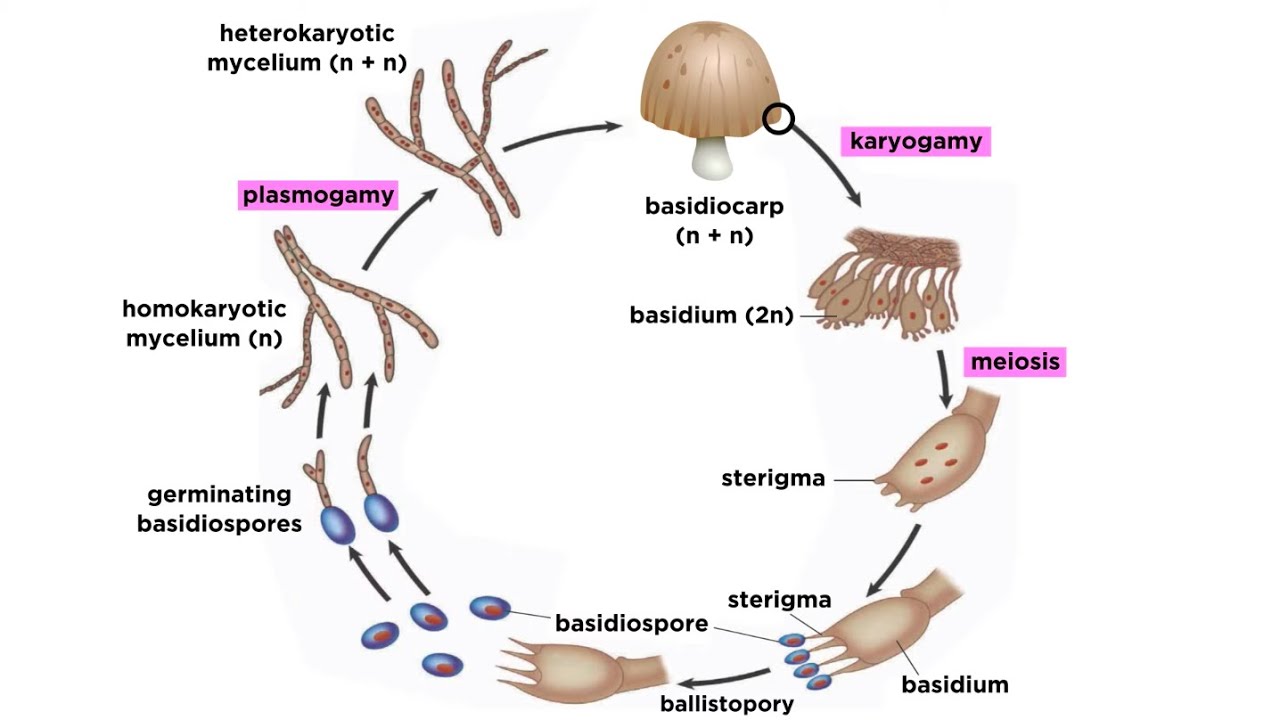
Basidiomycota Part 2 The Mushroom Life Cycle Youtube
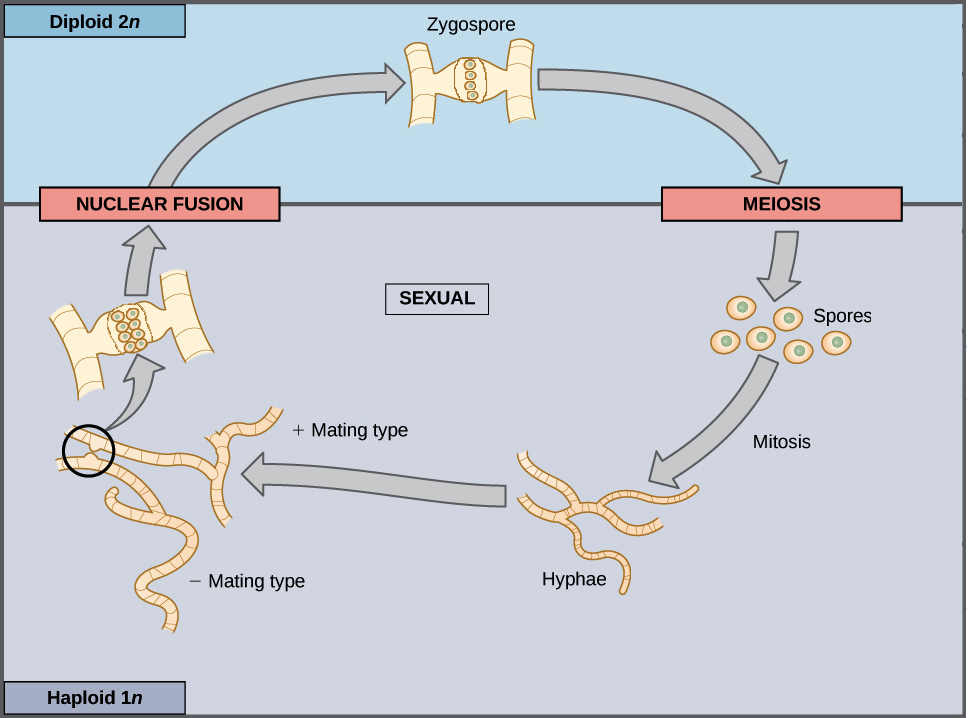
Sexual Life Cycles Article Meiosis Khan Academy

Diagrammatic Representation Of Mushroom Life Cycle Download Scientific Diagram
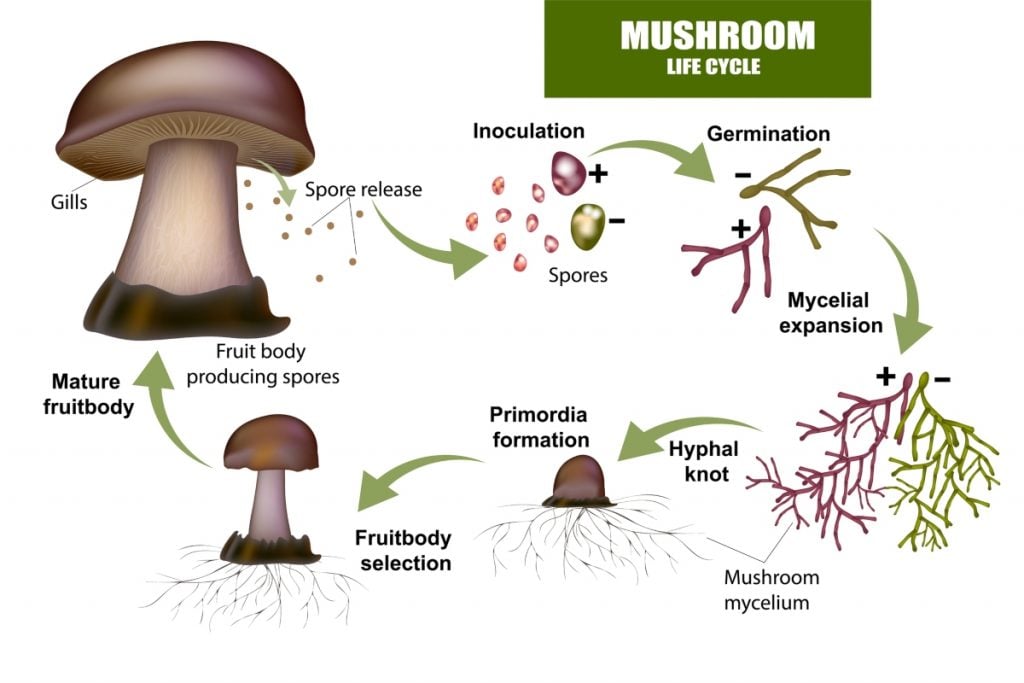
A Detailed Explanation Of The Mushroom Life Cycle Grocycle
Rvb Gag0rsz9nm
Fungi Organismal Biology

Reproduction In Fungi Life Cycle Of Fungi Youtube
Fungi Explained Here Is What You Need To Know Microscope Clarity

Life Cycle Of A Mushroom Worldkids

Biology Pictures Fungi Life Cycle 3 Life Cycles Fungi Biology
What Is Dimorphic Fungi Dimorphic Life Cycle Examples Transmission Biology Reader
Zygomycota Microbewiki

Fungus Reproduction Youtube

Plasmogamy An Overview Sciencedirect Topics